

SEVEN LEVELS OF WAR: FROM HIERARCHY TO SIMULTANEOUSNESS AND MULTIDIMENSIONALITY
September 22, 2026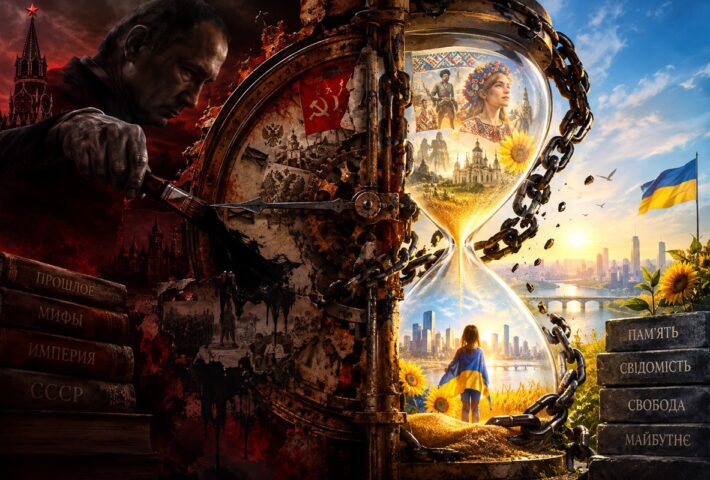
Multidimensional warfare is a modern research framework used to describe a confrontation that unfolds simultaneously across all available domains. Researchers often use equivalent English terms such as “full-spectrum warfare,” “360-degree warfare,” or “multi-domain operations.”
Unlike the concept of “hybrid warfare,” which primarily emphasizes the combination of disparate means, this model views the operational space as an integrated system of interconnected domains. A single strategic goal can thus be achieved through synchronized influence across dozens of distinct planes, where action in one domain triggers a cascade of effects in others.
The previous iteration of the “seven levels of war” model, published in October 2025, already requires revision. Rather than existing in a rigid hierarchy, the various dimensions and domains of confrontation interpenetrate and mutually reinforce one another. Consequently, the “seven levels of war” should not be visualized as stacked floors in a building. They do not form a strict hierarchy, nor do they imply a mandatory progression from the first level to the seventh. The traditional formula suggested that if a problem could not be resolved at a specific level, one simply had to escalate to a higher one. The updated formula is fundamentally different: if a problem cannot be solved within a single dimension, the solution lies in reconfiguring the interdependencies across multiple dimensions simultaneously.
1. THE WAR FOR AGENCY AND THE MODEL OF THE FUTURE
Between 2025 and 2026, fundamental shifts occurred in how various domains of confrontation are conceptualized. Countering disinformation and FIMI (Foreign Information Manipulation and Interference), along with traditional formulations of “hybrid warfare,” receded into the background, yielding center stage to discussions centered on the cognitive domain.
I first highlighted this dynamic in the summer of 2021 through the concept of the “sixth battlefield.” However, for years, my thesis — that combating disinformation alone is an ineffective instrument of modern conflict — was largely dismissed by colleagues, while donor funding continued to be channeled into studying Russian narratives and promoting media literacy.
In 2025, the Ministry of Youth and Sports of Ukraine initiated efforts to affirm Ukrainian identity, engaging civil society experts in the process. In doing so, the ministry successfully set the agenda for the discussion. Now, the newly established “Mnozhyna” Foundation has launched a grant program titled “Identity” to support Ukrainian civic organizations. However, simply answering the questions “Who are we?” and “How does the enemy exploit our weaknesses?” is no longer sufficient. Despite the ongoing war, we must continue to address a deeper challenge: “What kind of political community do we want to become, and who has the right to determine our future?”
This central issue is the focal point for both “people with cardboards” while fighting to shape Ukraine’s political landscape — and their opponents, who protest against the external management of international experts and the perceived infallibility of self-appointed “monopolists of integrity.”
This struggle for agency of Ukraine unfolds against a backdrop of intense pressure from both Moscow and Washington regarding the framework of potential ceasefire agreements. Both capitals seek to impose an alien vision of Ukraine’s future through territorial claims, forced neutrality, restrictions on foreign policy choices, limitations on statehood, and imposed conditions for peace. Crucially, public willingness to discuss a cessation of hostilities is not equivalent to a willingness to accept a Russian or American-engineered construction of peace. This distinction underscores the vital importance of separating territorial compromise, a ceasefire, and the ultimate loss of agency.
At the same time, identity can no longer be treated as a homogeneous and automatically positive resource. Within the Ukrainian political nation, there are — and will continue to be — growing disputes regarding the fair distribution of the burdens of war, the relationship between the state and its citizens, the treatment of veterans, emigration, the return of displaced citizens, the post-war political system, and the acceptable price of peace.
Ukrainian identity can no longer be viewed as a finished monolith. It is no longer exclusively about national or ethnic characteristics, and even less about denying or fighting Russia. Over the next six months, competition between different models of “post-war Ukraine” is likely to intensify. Initially, peace proposals and negotiation terms will test the limits of what is socially acceptable. Later, the electoral process will test our ability to shape our future not only through war, but also through peace.
2. ELIMINATION OF THE EXISTENTIAL THREAT AND THE POLITICAL OUTCOME OF THE WAR WITH RUSSIA
The second level of confrontation remains the most obvious, as Russia — alongside the United States and China — acts as a natural opponent of Ukrainian agency. However, the military outcome and the political outcome of the war are not identical. Warfare and negotiations have gradually ceased to be mutually exclusive states.
Previous iterations of the “seven levels of war” model likewise did not equate the initiation of negotiations with the end of the war, and territorial control, while still critical, does not automatically dictate the final strategic outcome. We are fighting for a post-war framework of existence in which an existential threat from Russia no longer looms; otherwise, any struggle for territory becomes meaningless.
It is increasingly evident that the definition of victory at this level — encompassing both kinetic and cognitive domains — depends heavily on developments across other dimensions. Only through a comprehensive understanding can we truly define what constitutes a victory, a defeat, an acceptable cessation of hostilities, a frozen conflict, or the transition of the conflict into a different phase.
Over the next six months, the parallel coexistence of combat and negotiation tracks remains the most likely scenario. A ceasefire will not automatically bring the conflict to an end. Furthermore, the electoral process — which will begin as soon as the front lines fall silent — may pose even greater risks to Ukrainian society.
3. SEPARATE SILOS CONFRONTATION – COMPETITION OF SECURITY ORDERS
In March 2021, former Director of National Intelligence Avril Haines presented the U.S. intelligence forecast Global Trends 2040, which outlined several potential trajectories for humanity, including the “Separate Silos” scenario. By 2026, it is evident that this scenario is actively materializing on the global stage.
For instance, discussions regarding a potential Russian invasion of the Baltic states have been unfolding for months. Yet, European and American experts express profound skepticism over whether NATO member states would actually invoke Article 5 of the North Atlantic Treaty. This uncertainty reveals that the organization — created for the sole purpose of resisting military aggression from the East — risks failing to perform its foundational function.
Tulsi Gabbard, who succeeded Avril Haines as the head of U.S. National Intelligence, dismantled the analytical unit responsible for preparing the Global Trends 2040 document referenced earlier. Just a month after this decision, the U.S. administration released a new National Security Strategy designating the Western Hemisphere as its core sphere of interest. In presenting the strategy, Donald Trump declared that “Europe is undergoing civilizational erasure“.
All subsequent actions from Washington indicated that the concept of a “united West” no longer exists. If Europe wishes to survive, it will be forced to transition to autonomous security management — a shift currently taking shape through the functioning of a “Coalition of the Willing.”
The Shanghai Cooperation Organisation (SCO) summit, held in late August 2026, did not yield breakthrough strategic documents — for instance, Putin’s push to establish a joint international bank was unsuccessful. Nevertheless, the summit once again underscored the non-Western world’s enduring interest in constraining the global influence of the United States and Europe.
Consequently, this level of confrontation represents a systemic competition between rival security architectures and coalition networks (or “silos”). These blocs are bound by shared security cooperation, which translates directly into technological alignment and economic collaboration designed to reinforce both their technological edge and collective security.
Over the next six months, we can expect a further escalation of European security responsibilities, the rapid proliferation of ad hoc coalitions, and continuous, high-stakes bargaining between the United States and Europe regarding the equitable distribution of costs and risks.
Ukraine has no viable alternative to integrating as deeply as possible into the European security system, transforming itself into a structural interest for its partners rather than remaining a mere instrument of the political cycles in national capitals. Initiatives like the Freyja anti-missile system project and the Drone Deals network exemplify this exact vector of development. The pivotal question is which “world” (or separate silo) Russia will ultimately inhabit. If it remains a raw-material, geopolitical, and economic appendage of China, the confrontation between these global blocs on Ukrainian territory will drag on for generations.
4. TIME-WAR (CHRONOWAR): THE DISSOLUTION OF THE OLD WORLD AND THE COMPETITION FOR A NEW WORLD ORDER
The most difficult level of war to understand and configure sits at the center of gravity of the “seven levels of war.” The technological transition unfolding before our eyes heralds both a new technological era and simultaneous future shock. By the fall of 2026, it has become increasingly clear that disorder and reordering are occurring concurrently: the old order no longer functions in its previous form, yet a new stable order has not yet emerged. “Time-war” is a concept explored in Western military thought, philosophy, and chronopolitics that focuses on time, speed, tempo, and narrative.
In a technological and tactical sense, this is a struggle for dominance in the speed of decision-making. At the operational-tactical level, this manifests as outpacing the enemy’s OODA loop (Observe, Orient, Decide, Act). The use of artificial intelligence and cyber technologies makes it possible to accelerate combat control to a point where a human is physically incapable of reacting in time.
Whoever controls time and stays ahead of the curve forces the enemy to “live in the past” (constantly catching up and reacting). In fact, the paradigm of “countering disinformation” and FIMI has permanently relegated us to a catch-up position, stripping away our ability to fight at the level of the chronowar. The exact same outcome will occur if the cognitive domain is approached through the dubious categories of “cognitive security” or “cognitive defense.”
This formula has proven effective since the evolutionary confrontation between Cro-Magnons and Neanderthals. Adaptability, technological advantages in weaponry, and higher reproductive rates drove the evolutionary victory of the Cro-Magnons, whereas the Neanderthals vanished approximately 40,000 years ago — either by dissolving into the dominant Sapiens population or becoming extinct due to resource scarcity.
The key to victory in this context lies in who can move along the axial time of past and future, and with what intensity, while simultaneously operating with a clear understanding of the past and the capacity to shape the anticipated future.
For instance, key political actors in Polish society have created a dynamic wherein they attempt to leverage history for present political gain. This risks allowing the past to dictate the agenda of the present, thereby stripping political operators of the ability to safeguard their interests in the future. It is crucial for architects of the political order not to lose their way along the axis of time, lest the past begin to dictate its own agenda to them.
In essence, chronopolitics entails a war for control over history, memory, and perception. On the Russian side, this manifests as an attempt to impose an imperial version of the past and rob society of its belief in its own agency, inducing a state akin to “canceling the future.”
However, in a broader sense, this is also a fundamental choice between rigidity—the desire to preserve the status quo—and a readiness for change, coupled with the ability to take control of shaping the future.
A vast number of representatives among global elites, who base their well-being on preserving the rules and status quo established during the twentieth century, are clashing with another faction of global elites determined to radically dismantle that status quo.
Because Ukraine holds no beneficial status quo in the past, its interests lie solely in the future. Yet a major portion of the European paradigm — which remains Ukraine’s definitive civilizational choice — sees its primary advantage precisely in preserving the status quo and business-as-usual. This deep division is one of the most hazardous fault lines within the European cluster, an alignment to which Ukraine nonetheless has no alternative.
Meanwhile, those who demonstrate a willingness to operate amidst uncertainty will be able to influence the instruments of the time-war, accelerating or decelerating the pace of change. Under this logic, Ukraine must stop positioning itself as a defender of the previous status quo, often framed as the “rules-based order.” Its strategic task is to become a co-creator of the next order, wherein European security and agency serve as foundational principles of a system that cannot exist without Ukraine.
5. COMPETITIVE INTERDEPENDENCE BETWEEN THE USA AND CHINA
In the Global Trends 2040 forecast by Avril Haines, the authors outlined a scenario known as “Competitive Coexistence,” which is unfolding simultaneously alongside “Separate Silos.” This “competitive coexistence” between the U.S. and China manifests as a struggle for leadership in the next technological order, yet stops short of direct armed conflict.
The U.S. and China compete concurrently across technology, markets, infrastructure, political influence, standards, and the security environment, all while remaining economically interdependent and capable of pragmatic bargaining. Confrontation, negotiation, and interdependence exist side by side.
Much will depend on Europe’s position and agency. Furthermore, the roles of India, the Gulf states, and other middle powers must be taken into account; rather than simply choosing between Washington and Beijing, they are leveraging great-power competition to expand their own freedom of action.
The next six months will likely feature a blend of confrontation and accommodation. Technology, artificial intelligence, Taiwan, critical minerals, and control over strategic supply chains will remain flashpoints of competition, while trade will function simultaneously as an arena of conflict and a stabilizing force. Ukraine’s optimal position is one in which it avoids becoming the passive subject of a grand bargain and instead generates its own strategic value for the United States, Europe, and other centers of power.
6. THE FIGHT FOR SPACE AND TRAFFIC
The previous name of this level “geopolitics versus geoeconomics” and the formula “the world of borders versus the world of roads” were heuristically productive, but the word “against” turned out to be erroneous. Since the confrontation is not about the tools, but about the subjects who use these tools.
Geoeconomics is increasingly becoming a way of implementing geopolitics. And geopolitics formats the world so that it is as convenient as possible for geoeconomics.
Xi Jinping became the head of the PRC on March 14, 2013, and six months later he announced the Belt and Road Initiative (BRI), which became the construction of a geoeconomic basis for the traffic of Chinese goods and technologies. And since 2021, the Chinese political leadership has begun to announce one global initiative per year to create a geopolitical configuration in which the BRI will function while cementing the format of state power in Beijing.
In 2026, issues of critical minerals, supply chains, energy, payment systems, sanctions, technological standards, and trade function as tools of geopolitical struggle. Conversely, the situation in the Strait of Hormuz and the blockade of oil traffic is a clear illustration of how geoeconomics dictates the possibilities of the geopolitics of bombing.
“Borders” and “roads” are not in opposition — they have merged into one system of struggle for control over space and flows. The desired change for Ukraine is a gradual transformation from a recipient of external resources to an important node of European economic, transport, energy, technological, and human networks.
7. ONTOWAR: COMPETITION OF ONTOLOGICAL PLATFORMS FOR THE DEFINITION OF LEGITIMATE REALITY
The ontological war is an evolutionary confrontation between political and civilizational platforms aimed at establishing the foundational categories through which societies define political subjects, truth, legitimacy, norms, and permissible futures.
The outcome of this ontowar is determined not merely by the spread of a narrative or a person’s mindset, but by the capacity to generate one’s own categories and transform them into operational norms for managing societal institutions and practices — essentially, constructing an independent structure of political and international reality. It is about naming things and phenomena, and then using methods of cognitive confrontation to demonstrate that your perception of reality is the only viable one.
While cognitive warfare attempts to influence what people think about a specific event or phenomenon, ontological conflict operates at a higher level: What constitutes an event in the first place? Who actually defines reality and its parameters? Can a country be a sovereign state or is it an “artificial entity”? Is an international border a fundamental norm or merely a historical accident?
Cognitive warfare is fought over what people think about reality; ontological warfare is fought over the categories through which reality becomes politically comprehensible in the first place. The cognitive domain asks: How should reality be perceived? Ontological warfare determines: What actually constitutes reality?
In their reports, NATO structures explain that the instruments of cognitive warfare are directed at disrupting the OODA loops of military leaders, sabotaging their ability to manage forces and resources, and demoralizing and disorienting society.
Ontological warfare creates a framework of categories that prevents the very process of forming an OODA loop regarding a specific adversary from beginning, thereby paralyzing the foundational structure of existence. For example, European experts are eager to discuss the necessity of operating within the cognitive domain due to the risks and threats facing European democracies. At the same time, they publicly acknowledge that Europe, the European Union, and individual national governments have never had, are not developing, and are not even discussing a coherent strategy regarding the Russian Federation as a source of threats — meaning they entirely lack a functional OODA loop regarding Russia as an existential threat.
Russia is not simply disrupting their OODA loop; it has constructed an ontological space in which an OODA loop directed against Russia cannot even be formed. For instance, speaking at a panel discussion hosted by the Ukrainian Prism think tank, cognitive warfare expert Dr. Tanna Crewson stated that Europe should view Russia as a chronic, incurable disease that can only be managed with ongoing treatment. This perspective vividly reflects the ontological paralysis of European thought.
Meanwhile, Russian thinkers feel entirely free to discuss Europe as an object using any categories they choose — ranging from “reducing it to nuclear ashes” and “marching to Berlin” to “restoring Nord Stream” and “jointly developing the Arctic shelf.”
Conversely, the categorical apparatus of Europeans remains restricted to “faith in a democratic Russia, whose bright future will be chosen by Russians themselves” — the very same Russians who routinely discuss reducing Europe to nuclear ashes.
Thus, ontological warfare establishes the broader structural framework for the chronowar: it defines what the past looked like and shapes the future by determining which kind of world is considered normal, possible, and desirable. Ontological war is not merely about interpreting the past and present; it is a struggle for the right to establish a specific future as the norm. To achieve this, one must continually build and refine an independent ontological platform through strategic documents and policies that define core categories and norms, which are subsequently translated through institutions into everyday practices, thereby establishing a specific order of things.
Conversely, this process can also operate in reverse, occurring when an existing order of things becomes entrenched within the spontaneous, everyday practices of ordinary people. These practices are subsequently institutionalized, forming categories, norms, and rules that reinforce the underlying ontological platform through repetition. If a given practice persists long enough and receives the backing of power and institutions, it eventually begins to be perceived as natural.
Ontological warfare is, at its core, a struggle over which version of the world is deemed normal and natural. Strategic victory at this level is achieved not when everyone simply repeats your talking points, but when your foundational hypotheses about the world no longer require explanation and instead become default assumptions.
If the principle that “states cannot alter the borders of other states by force” is accepted as a self-evident premise of international politics, that represents the ontological advantage of one particular model of order. If, however, the principle that “large states possess natural spheres of influence within which the sovereignty of smaller states is constrained” becomes normalized, that constitutes an entirely different ontological platform.
It is precisely this competition between fundamental assumptions that defines the seventh level of war. This level ultimately decides who is recognized as an autonomous subject, how truth is determined, who holds the right to act, which rules are regarded as natural, and what kind of global order can be both imagined and accepted.
